The Dismantling Coalition holds land return as a key mechanism of affirming sovereignty to Indigenous Peoples. Unfortunately, under the current unjust laws and systems of our world, that’s not truly possible without also transforming those systems, another core tenant of our work. That’s why, beginning July 1, 2025 when you donate to our Landback Fund (now called the Land Justice Fund), 75% of your donation goes to our Landback rematriation partners and the other 25% supports the Coalition in our work toward system change.
Land return and land repair are essential, and so is the work of dismantling laws and policies that make landback necessary. In the world we are working toward, landback will not be needed because our laws and policies will not take land from Indigenous Peoples and will restore land to them.
We know this work will take decades and that only systems change work can end the Doctrine of Discovery (DofD) and its influence on our laws and policies. Designating a portion of Land Justice Fund contributions to systems change ensures that we can continue to work for liberation across generations as we collaborate with Indigenous partners in liberating land now.
Watch this 4 minute video on landback and systemic change to hear John Stoesz’s story about how and why he divided his land reparations contribution into two donations: one for direct buyback of Indigenous land and one towards systems change.
If you have questions about the 75/25 split or would prefer to designate 100% of your donation to landback projects, please contact Sheri at sheri@dismantlediscovery.org.
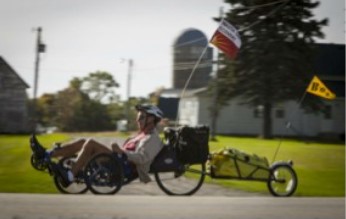
John Stoesz spent 30+ years working in leadership roles for faith-based justice and peace organizations. These include the Dallas Peace Center, Greater Dallas Community of Churches, Metropolitan Christian Council of Philadelphia, and Mennonite Central Committee Central States.
He now devotes his time to two passions: riding his recumbent tricycle and Indigenous justice. He continues to spend significant time on awareness raising, fundraising and organizing among white people, mostly in Minnesota and Kansas, for Native land return.
What is Rematriation?
Scholars Sabina Vaught and Heather Shotton define it this way:
“Rematriation is a powerful word Indigenous women of Turtle Island use to describe how they are restoring balance to the world… it means ‘Returning the Sacred to the Mother,’” (rematriation.com)
Why return Land to Indigenous Peoples?
According to the World Bank, about 36% of remaining intact forests are on Indigenous Peoples’ lands.
Indigenous communities safeguard 80% of the world’s remaining biodiversity, and forests on their land are better maintained with a higher preserved biodiversity than those on non-Indigenous lands.
How does this model differ from more traditional land return?
In this model everyone can participate, regardless of whether they have significant wealth. Smaller donors can contribute to Landback through this fund and their contribution will join together with the contributions of others.
This model honors how people from the middle class participate in wealth accumulation through private property, and offers a place for wealth redistribution.
These are some example tax assessments that you can model your contribution after. They are designed for people who earn mid-range income and/or wealth.
When you are selling or purchasing a home, consider assessing half of a percent to two percent of the total sale amount for your contribution. Example: 2k for a $400K home
The national average for home appreciation is 3% per year. Donating even a half of a percent, when compared to the accumulation of wealth from home ownership over a decade, is a small contribution that can make a big impact.
We define wealth as income plus assets minus debt. A family or household has wealth when their assets and income are greater than their debts. Here is a tool to help you assess your wealth.
If you earn $60,000 a year after tax and you don’t have kids, you’re in the richest 1 percent of the world’s population.
If you have a household income of $130,000 after tax and you’ve got a partner and one kid, you’re also in the richest 1 percent.
If you have a household income of $160,000 after tax and you’ve got a partner and two kids, you’re also in the 1 percent.
You may hold wealth if:
If you are the steward of wealth, we encourage you to consider the Zachaeus principle. The Zachaeus principle entails returning 50% of one’s estate.
You and your household must decide what is right for you. We are happy to connect with you to discuss these suggestions, or ideas you bring to this conversation.
We will not attempt to grow an endowment, which annexes assets and is invested in the stock market. We follow a relational process of rematriation. We work with partners with whom we are in relationship to identify projects and partner with them in realizing the land return/repair most appropriate to their context.
We work with movement partners who strive for Indigenous self-determination, and we accompany them as they do landback and land repair. Many of these partners are small, grassroots, unresourced organizations, and realizing landback projects takes time within these contexts. Check out our Protocol for Land Justice Fund Partners for more details on how we select our partners.
Rematriation partners include:
The E’lip Tilikum Land Back Progam at Na’ah Illahee Fund, an Indigenous Women-led organization that will connect Coalition contributions to a campaign that is working to return land to the Yakama Nation (Central Washington State).
Tewa Women United, a multicultural and multiracial organization founded and led by Native women focused on environmental and reproductive justice, and generational healing. They are purchasing land adjacent to their current location that will allow them to grow their community programs.
The Salish School of Spokane which works to teach and revitalize the Salish language and culture. They are building a new campus for classes.
Donations by check should be made out to Pacific Southwest Mennonite Conference. Please mark “Coalition to Dismantle Doctrine of Discovery – Land Justice Fund” in the memo line.
You can mail checks to:
Coalition to Dismantle the Doctrine of Discovery
3258 Thompson Ave.
Alameda, CA 94501
Donate through PayPal: On PayPal’s drop-down menu, choose “Land Justice Fund” to designate your donation for this project.
NOTE: Although Paypal does not name Dismantling the Doctrine of Discovery Coalition as a recipient in the donation process, all money given through this link (minus Paypal fees) will support our work.
Watch our Rematriation webinar from Nov 21, 2024. In the last five minutes of the video there is an additional Q&A addendum answering further questions from webinar participants.
Register for Land Justice Coffee Hour – Join Coalition leaders by Zoom once a quarter, on the first Monday of the month, to have your specific questions about the Land Justice Fund answered. Open to anyone who wants to join!
Reflections on Landback & Reparations: