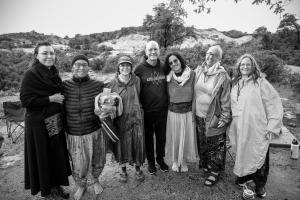
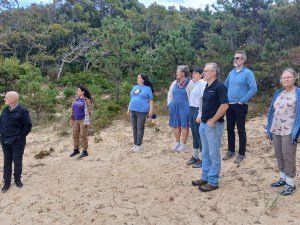
Shinnecock Delegation at Westwoods (land owned by the Shinnecock Nation and part of their ancestral territory). From left to right: Bishop Pat Bell, Alicia Maldonado-Zahra, Tela Troge, Holly Thompson, Elizabeth Yepez, Jon Zirkle, Matt Carlson, and Sue Bartholomew
As part of my volunteer work with the Repair Network, I joined a delegation to the Shinnecock Nation on Long Island, NY.
The tribe’s history goes back hundreds of years. When settlers first arrived in the area in 1640, the Shinnecocks numbered around 2,000. They were skilled on the water, spear fishing for eel, harvesting shellfish from the bay and hunting whales from small canoes.
In the mid-19th century, New York State set aside an earlier agreement between the tribe and Southampton, and reduced the reservation to its current size of 800 acres, a decision the tribe has never accepted.
By 1875, disease had reduced the reservation’s population to about 200. The following year, 10 Shinnecock men died helping to recover a freighter that had run aground offshore. News accounts said the loss marked the end of the tribe. “The recent drowning of the Shinnecock Indians on board the wreck of the Circassian has nearly extirpated what was once a large and powerful tribe,” said an article in The New York Times on Jan. 11, 1877.
The New York Times says:
“As Shinnecock Indians returned to their reservation on Long Island after World War II, elders warned that their tribe’s long struggle for survival was once again threatened. Decent jobs were scarce and many Shinnecock veterans were leaving, draining the reservation of needed hands.
“The older men said, ‘If all of you young men move away, who is going to be here to carry on the work of the reservation and our traditions?’ ” recalled one war veteran, Harry K. Williams, who is now 85.”
According to one resource, the tribe’s court fight “began” in 1978, when it filed a petition for recognition. However, we learned from Shinnecock leaders Tela Troge and Holly Thompson, while there, that this was actually the culmination of generations of work, consultations, and petition. Filing this was a huge step.
The tribe pressed this petition for 28 years, but in 2006, when they still had not been given an answer, the Shinnecock sued the Interior Department.
Four years later, in October 2010, the tribe was federally recognized, joining four other native tribes from Long Island to meet the criteria for recognition. Federal recognition means many things – for the Shinnecock people, it meant federal financing would be available for homes (mortgages are not available to people living on reservations); eligibility for grants for community projects, healthcare, infrastructure, and jobs, as well as support from the Bureau of Indian Affairs.
Importantly, it also meant that the tribe had the right to self-determination, preservation, and to be considered – again – as a sovereign people, subject to their own governance and realizing (again) a government-to-government relationship with the US government.
During my time there, the tribe was reeling from the latest effort by the town of Southampton and the State of New York to challenge parcels of the Shinnecock nation’s land. While it was thankfully unsuccessful, this was the second such attempt in the last several years, costing the nation (and Southampton) a ton of resources and energy, and millions of dollars in litigation.
According to Tela, more such tribal recognition challenges are expected in court, especially as land in the Hamptons continues to be extraordinarily valuable, and there is no shortage of funds from both the town and the developers to lay claim to it.
Now, the Repair Network’s Shinnecock working group (including myself!) are back in our respective homes and communities, and considering the path ahead. Together with our hosts and new friends, and the staff of the Repair Network, we’re looking to build a landback campaign of awareness, support, and solidarity in our own circles of influence.
Would you like to learn more and take action? Here are some ways you and your faith community can get involved:
- Share this blog with anyone you know in New York!
- Pray (individually and corporately in your place of worship) for:
- All creation in eastern Long Island, which has been overtapped for extractive wealth for generations
- The flourishing of local caretakers, for blessings on their work and resources, and in thanksgiving for the resilience of all creatures that persist
- The ceasing of harassment of the Shinnecock tribe, including their tribal officers, advocates, partners, and members, in all its legal, physical, and spiritual forms
- Continued dismissal of lawsuits against the Shinnecock and that their futility become a point of attention for political leaders, and therefore, a turning point
- For the Shinnecock, an increase in land grants, land-related reparations, new and increased discounts in purchase price for land historically inhabited by tribal people, and new support from the federal government, state agencies, and CPF
- People of faith in New York City and Long Island to join the tribe in advocacy for their right to exist in their native homeland
- The pervasive spirit of capitalism and expansion that exists in our country to crack under the weight of justice deferred, everywhere, and specifically today, in Southampton NY
- Watch this documentary about Conscience Point, Shinnecock history, and their ongoing land struggles.
- Organize a screening of the above documentary, and invite a member of the Shinnecock Working Group by Zoom or in person to engage in conversation with your community.
- Join the Coalition to Dismantle the Doctrine of Discovery’s Shinnecock Working Group which meets online twice a month for 1 hour as they organize a campaign with the guidance of Shinnecock leaders (to receive an invite, email admin@dismantlediscovery.org)
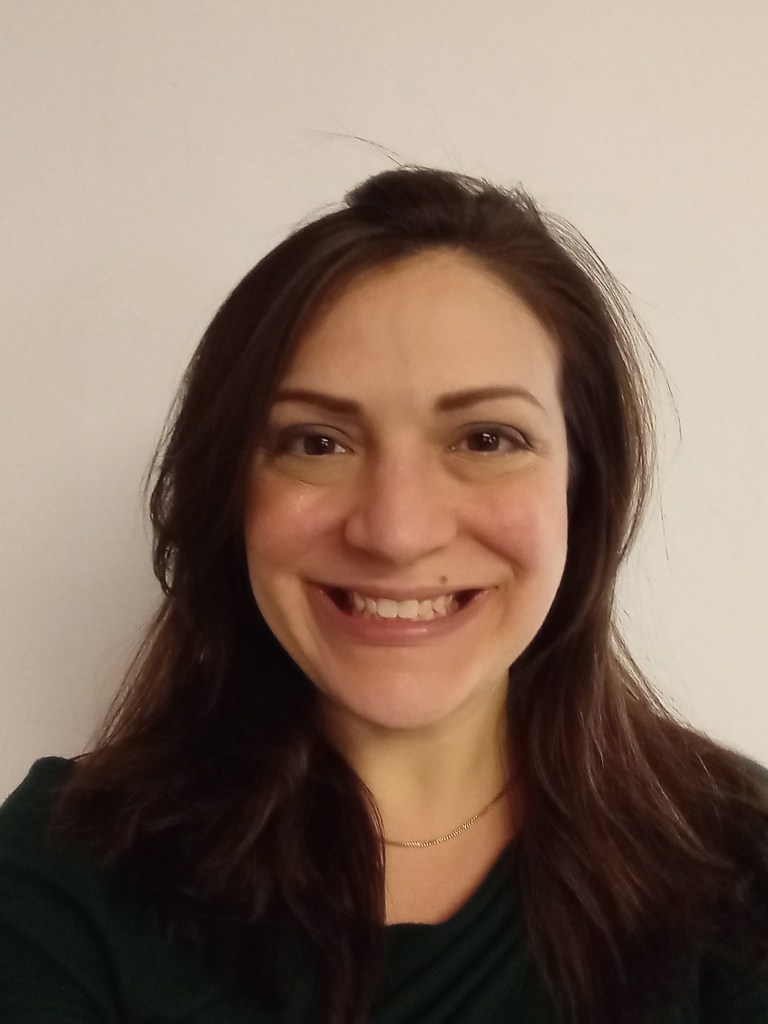
Elizabeth Yepez (she/her) is a longtime New Yorker who was influenced early by a mix of ’90s conservative evangelicalism, union stories at dinner, and so, so many books. In her twenties, through volunteer work with survivors of domestic violence, she learned about the unique role faith communities play in interrupting – or enabling – violence. An active member of an Anabaptist church in the city, through her denomination, she became involved in the Coalition to Dismantle the Doctrine of Discovery’s Repair Network. Alongside her church, she followed the leadership of indigenous women in fundraising, educating, and endorsing in a variety of ways the upholding of the Indian Child Welfare Act ([Haaland v. Brackeen], ruled on by the Supreme Court in 2023). Currently, she is part of a landback working group comprised of Mennonites and non-Mennonites alike, in partnership with the Shinnecock Tribe in Long Island, New York. She is also a 2025-2026 Interfaith Civic Leadership Academy Fellow through the Interfaith Center of New York (ICNY).