I grew up in Central Illinois on the land of the Illinois and Peoria confederations of Native Americans. The original twelve or thirteen tribes of peoples in that area were encountered by the French traders in the 1700’s and consequently suffered losses due to diseases and displacement. The remaining groups that constituted the Illinois confederation were eventually removed by the British and then the US governments, undergoing a series of treaties and treaty violations. The Peoria confederation currently has about 3000 members in the state of Oklahoma. They have no remaining presence in central Illinois.
My settler ancestors arrived in the late 1800’s from Mennonite communities in the Alsace-Lorraine region of Switzerland and Germany, settling in central Illinois, particularly Tazewell County. They were religious and economic refugees from those areas, escaping military conscription and taxation. At the time they arrived, the Illinois and Peoria confederations had already been removed. I heard no stories of encounters with those original peoples. The Mennonites purchased plots of land stolen from the original occupants at good prices. Most of the plots were around 200 acres, and my ancestors established family farms, raising animals (pigs, cows, chickens) and crops (wheat, soybeans and corn) as well as large vegetable and fruit gardens to feed their families.
In the 1970’s this land began a consolidation into agribusiness, smaller farms (those of my grandparents included) being sold and purchased by local farmers who began farming large tracts of 1000 – 2000 acres of soybeans and corn, or establishing factory animal farms of pigs and chickens. As this happened, more and more fertilizer and pesticides were used to encourage better crop production, and more of the fencerows and ditches were mowed and converted to crop production. The birds and animals that coexisted with the early family farms disappeared and the soil that was healthy became sterile.
I visited my place of origin this last year when I attended the funerals of several aunts and uncles. One anecdote from that visit has stayed with me. Hopedale, the town in Tazewell County where my family lived, had a new park, and the town had excavated a retention pond in the middle of the park. Next to the pond was a large pile of dirt that the city invited anyone who wanted some topsoil to come and take it away for free. The problem was, this dirt was completely dead, all life having been destroyed by years of pesticides and fertilizers. Nothing at all would grow on it, and no-one wanted it.
I am a native plant and vegetable gardener, and this made me so sad. The trajectory of my home town from the prairie that was occupied by the Illinois and Peoria confederations before the 18th century, to this total eradication of life from the land is for me an unfathomable tragedy. I remember that my brothers searched for and found arrowheads on the lands we occupied. In grade school we mapped the Native American tribes that once lived in our area. But there were
no stories, no narratives that made this history real for us.
In our minds the original occupants of our land had simply left. We did not know them as people, only statistics. We did not understand the cruelties of removal, cultural aggression and genocide. And then, after they were gone, we destroyed the prairies. In 1800 most of the land in Illinois was prairie. By 1900 only 3% of that prairie remained. By 2000 we had also destroyed all of the life left in the farmland through chemical applications. The stretch of farmland from Iowa to Ohio is an ecological wasteland, a travesty of destruction of life.
All this is a backstory to why I give monthly to the Landback fund at the Coalition to Dismantle the Doctrine of Discovery. My hope is that the land purchased for the people who will receive it will be redeemed through their care of it, their understanding that all life is connected and that the way we treat any species is the way we treat all species. It is my small way of adding to the repair for the many harms that have been done to the original occupants of our country, to carving a path toward justice.
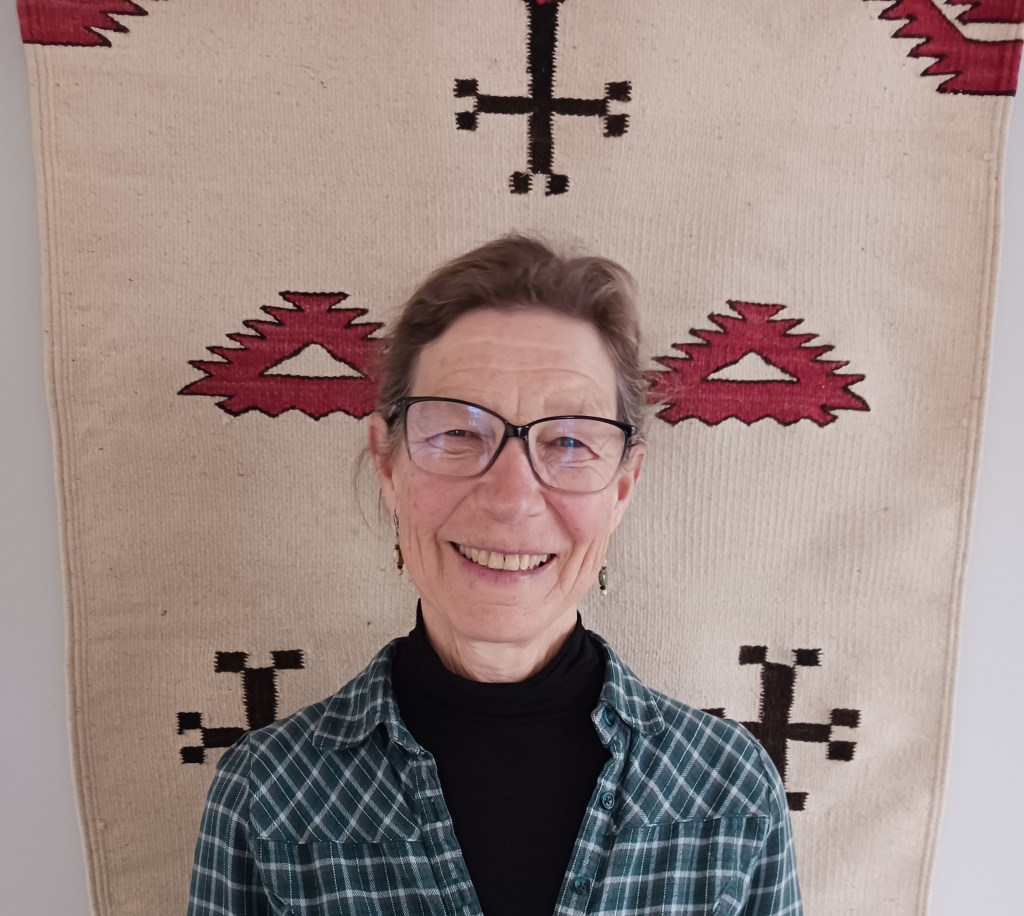
Ruth Kauffmann currently resides in Goshen, Indiana. She attends Assembly Mennonite Church, which is working toward promoting native plant landscapes as well as dedicating a part of their giving to a 2% fund for reparations. Her small urban yard is planted in native plants and she enjoys the bees, butterflies, birds and squirrels that share the outdoor space with her.